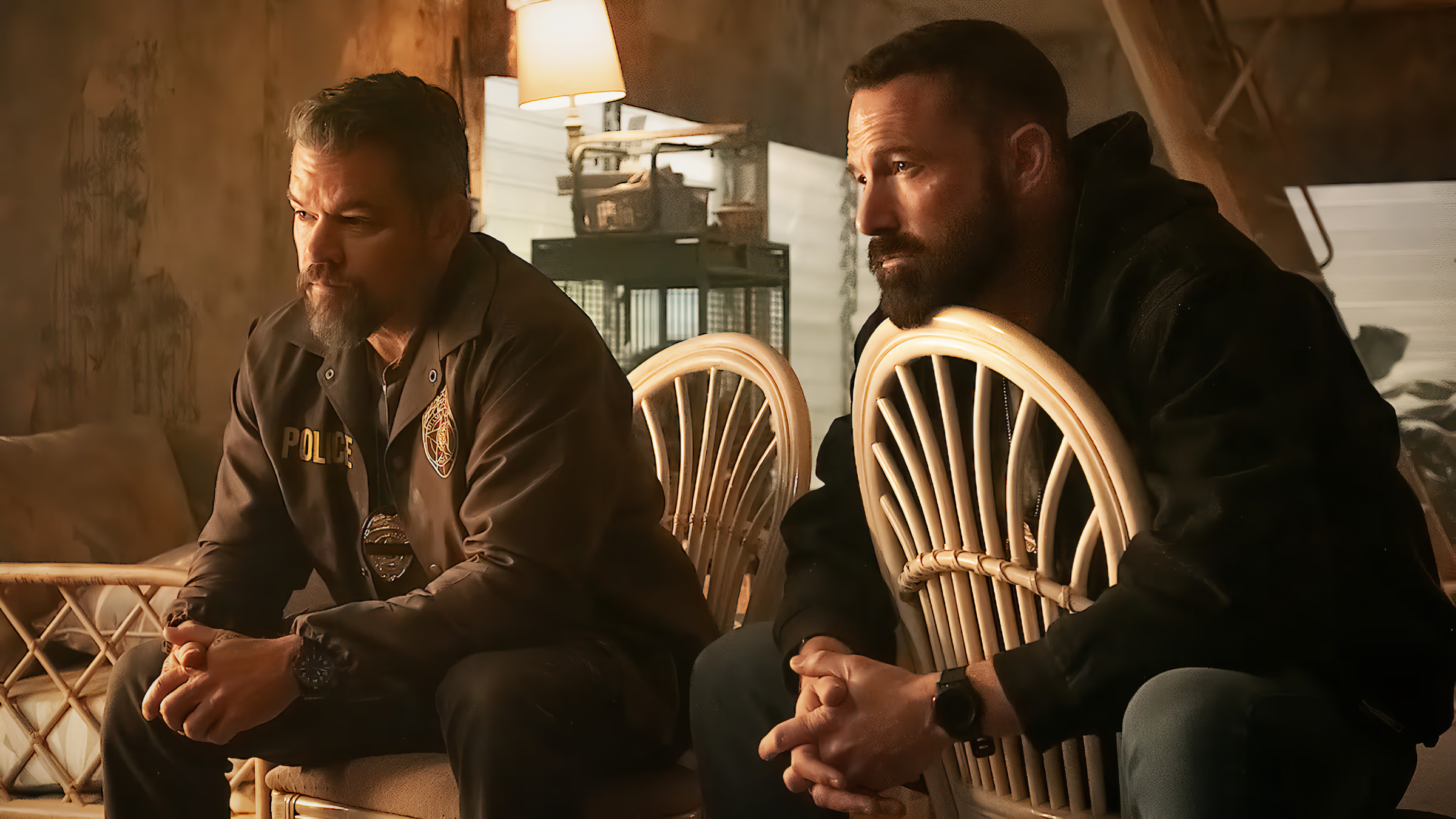
If you've just finished the tense, atmospheric final moments of Netflix's The Rip, you're not alone in needing to process its conclusion. The climactic scene—with Matt Damon's character, Liam, walking away from a burning dock—leaves audiences with more questions than answers. Directed by Ben Affleck, the film weaves a complex narrative about loyalty, betrayal, and the inescapable pull of the past.
Here is a direct explanation of The Rip's ending:
The ending reveals that Liam (Matt Damon) orchestrated the entire heist's failure to protect his estranged brother, Leo (played by Lucas Hedges), not to steal the money. The final phone call Leo receives isn't from a new employer, but from a covert witness protection handler, confirming Liam's deal: he takes the fall for the botched robbery to erase Leo's criminal debts and give him a clean start. The burning dock symbolizes Liam destroying the last remnants of their old life and his own chance at freedom, choosing a form of sacrificial redemption.
1: A Direct Explanation of The Rip's Ending
What happens at the end of The Rip?
In the final scene, Liam (Matt Damon) burns the warehouse containing the stolen bonds and drives away, while his brother Leo (Lucas Hedges) receives a phone call on a pier confirming he is "clear." The film ends with the title card: "A Rip Tide Pulls Under, Never Out."
What is the meaning of the ending?
The ending means that Liam's entire heist plan was a sacrificial scheme to free his brother. He intentionally botched the robbery to draw the attention of federal authorities, cutting a deal to have Leo's debts wiped clean and entered into witness protection in exchange for taking the blame. The "rip tide" metaphor explains that Liam's actions, which seemed to pull everyone into danger, were actually a hidden current designed to bring Leo to safety.
Who is Leo talking to on the phone at the end?
Leo is talking to a U.S. Marshal in the Witness Security Program. This is confirmed in post-release interviews with director Ben Affleck. The call confirms that Liam's deal with the FBI has been finalized, granting Leo immunity and a new identity.
Why does Liam burn the money?
Liam burns the stolen bonds to destroy the evidence and sever any remaining connection his brother might have to the crime. It also symbolizes him burning his own future to give Leo a new one. He cannot use the money without implicating Leo, so destroying it is the final act of his sacrifice.
2: Character Motivations & The Final Twist
What was Liam's (Matt Damon) real plan?
Liam's real plan was never to succeed in the heist. As an ex-CIA logistician, he designed a mission that would fail in a controlled manner, attracting FBI attention. His goal was to negotiate a deal: he would take sole responsibility for the attempted theft of the corrupt military contractor's bonds in exchange for his brother's freedom from criminal debts and threats.
What was the deal Liam made?
According to narrative clues and director commentary, Liam cut a deal with Agent Reyes (played by Sandra Oh), an FBI agent investigating the military contractor. The terms: Liam provides evidence of the contractor's financial crimes and takes the fall for the heist. In return, the FBI clears Leo's name and enters him into witness protection.
Why did Leo (Lucas Hedges) agree to the heist?
Leo, desperate and in debt to dangerous people, believed his brother's heist plan was their only way out. He was unaware that Liam's true intention was to use the heist as a bargaining chip for Leo's safety, not as a way to get rich.
3: Key Symbolism & Metaphors Explained
What does the title "The Rip" mean?
"A rip" is a criminal term for a theft or heist. However, the film's core metaphor is an oceanic rip current. As explained by the title card, a rip tide pulls water under, not out—it's part of a circular current system. Similarly, Liam's plan pulled everyone into chaos, but it was part of a larger design to bring his brother to safety.
What does the burning dock symbolize?
The burning dock and bonds represent the destruction of the past. It is Liam's final act of severing his and Leo's ties to a life of crime, guilt, and shared trauma. By destroying the evidence and the prize, he makes Leo's new life irrevocable.
What is the significance of the river location?
The final scenes take place on the Charles River in Boston, a location steeped in the brothers' childhood. This brings their story full circle, showing that Liam's sacrifice is rooted in their shared history and his desire to rectify his past abandonment.
4: Unanswered Questions & Fan Theories
Did Liam survive and get arrested?
The film is intentionally ambiguous. The most supported interpretation, based on Affleck's comments, is that Liam turned himself in to the FBI off-screen. His drive away is toward surrender, not escape, completing his sacrificial deal.
What happened to the other crew members?
The fate of the other heist crew members (played by actors like Jharrel Jerome and Zazie Beetz) is not shown. It is implied they were either arrested in the botched heist or escaped with their lives but empty-handed, as Liam's plan always intended to sacrifice the operation.
Could there be a sequel?
Given the definitive, sacrificial nature of Liam's arc, a direct sequel is unlikely. However, a spin-off following Leo in witness protection has been a popular fan theory since release, exploring whether he can truly leave his past behind.
5: Director's Intent & Critical Reception
What has Ben Affleck said about the ending?
In an interview with The Hollywood Reporter, Affleck stated: "The film is about the myths we create to protect the people we love. Liam creates an elaborate, dangerous myth—a 'rip'—to save his brother. The ending is him finally letting that myth go up in smoke, making the protection real."
How have critics interpreted the ending?
Critical analysis has largely aligned with the sacrificial interpretation. Variety called it "a bleak but resonant conclusion about the cost of brotherhood," while The Guardian noted its "clever use of heist-movie mechanics to tell a deeper story about debt and redemption."
Is the ending based on a true story?
No, The Rip is a work of fiction. However, screenwriter Aaron Sorkin has cited real-life stories of familial sacrifice and complex plea deals as narrative inspiration.
Frequently Asked Questions (FAQ)
Q: What happens at the end of The Rip movie?
A: Liam burns the stolen bonds and drives away, having cut a deal with the FBI to take the blame for the heist in exchange for his brother Leo's entry into witness protection and cleared debts.
Q: What is the meaning of the rip tide quote at the end?
A: The quote "A Rip Tide Pulls Under, Never Out" means that Liam's dangerous plan, which seemed to pull everyone under, was actually part of a hidden current designed to bring his brother to safety.
Q: Does Matt Damon's character die in The Rip?
A: His fate is not shown. The strong implication is that he turns himself in to the FBI to fulfill his deal, sacrificing his freedom for his brother's.
Q: Is Leo in witness protection at the end?
A: Yes. The final phone call is from a U.S. Marshal, confirming that Leo's new identity and location are secured as part of Liam's deal.
Q: Why did Liam burn the money?
A: To destroy all evidence linking Leo to the crime and to symbolically burn his own chance at freedom, ensuring his brother's fresh start is complete.
Conclusion: A Sacrifice in Smoke
The ending of Netflix's The Rip ultimately subverts the classic heist genre. It's not about the thrill of the steal, but the cost of atonement. Liam's journey isn't toward a score, but toward a sacrifice—using his skills not to build a fortune, but to architect his own downfall as the price for his brother's salvation. The haunting final image of the burning dock isn't a failure; it's the pyre of Liam's old life, a necessary destruction to spark a new beginning for the brother he vowed to protect.
The film leaves us with a resonant question: How far would you go to rip someone you love from the current of their past? For Liam, the answer was: all the way to the end of the line.
Popular Workout Articles
-
.webp)
-

-

-

Best New Netflix Series to Watch in India This Year
15 July, 2026





.webp)